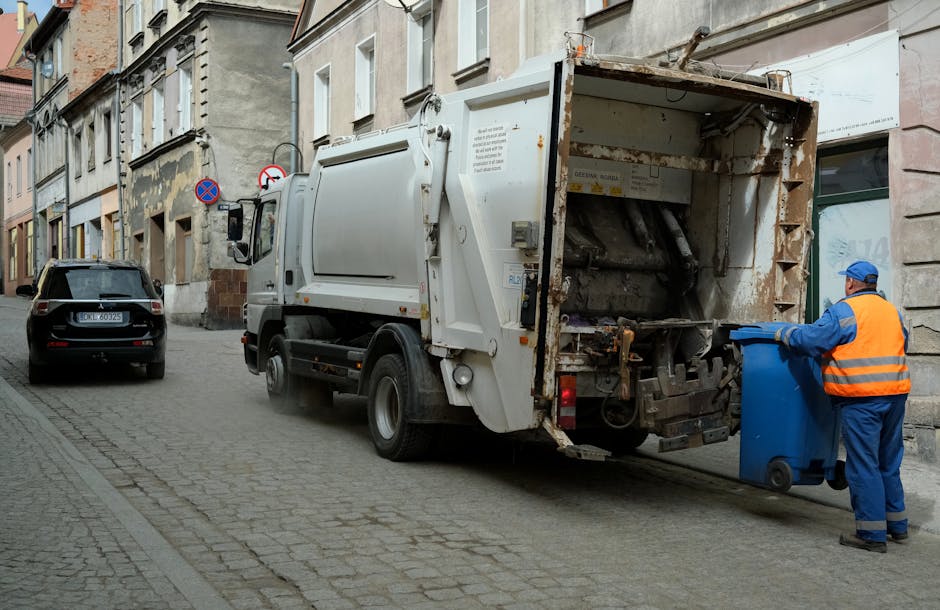
Avoid hidden rubbish removal fees in Coney Hall: a practical guide to fair pricing
If you are trying to avoid hidden rubbish removal fees in Coney Hall, you are probably not looking for anything fancy. You just want the job done properly, the price to make sense, and no nasty surprises when the team is standing by the front gate with the van running. Fair enough. Rubbish removal should feel simple, yet the bill can creep up fast if the quote is vague, the access is awkward, or the company has not explained what is included.
This guide breaks down how to spot extra charges before they appear, what a proper quote should cover, and how to compare providers without getting tangled up in fine print. You will also find a checklist, a comparison table, and a few real-world examples from the kind of clearances people in Coney Hall actually book: garden waste, old furniture, loft clear-outs, garage clutter, and the occasional builders' rubble situation that somehow multiplies overnight.
Table of Contents
- Why hidden rubbish removal fees in Coney Hall matter
- How rubbish removal pricing usually works
- Key benefits and practical advantages
- Who this is for and when it makes sense
- Step-by-step guidance
- Expert tips for better results
- Common mistakes to avoid
- Tools, resources and recommendations
- Law, compliance, standards and best practice
- Options, methods and comparison table
- Case study or real-world example
- Practical checklist
- Conclusion
- Frequently Asked Questions
Why hidden rubbish removal fees in Coney Hall matter
The problem with hidden fees is not just the extra cost. It is the uncertainty. You start with a tidy idea of what the job should cost, then suddenly there is a charge for lifting items from the garden, another for heavy waste, another for parking, and sometimes even a separate line for disposal. Before long, a simple clearance feels like a small negotiation. Not ideal.
In Coney Hall, that matters even more because many homes have tight driveways, awkward side access, or mixed waste types that need careful sorting. A quote that looks cheap at first glance can become expensive once the team sees the real job. That does not always mean the company is dishonest. Sometimes it means the job was not described clearly enough. But from your side, the result is the same: a price that no longer feels fair.
Good rubbish removal should be easy to understand. You should know what is included, what could change the price, and what happens if the load turns out smaller or larger than expected. That clarity saves money, yes, but it also saves time and a bit of stress. Let's face it, no one wants to be haggling over a sofa while standing in the rain.
Expert summary: the best way to avoid surprise charges is to compare clear, itemised quotes, describe the waste accurately, check access details, and confirm whether labour, loading, disposal, and VAT are included before booking.
How rubbish removal pricing usually works
Most rubbish removal companies price jobs using one or more of these methods: volume, labour, waste type, and access. Some use a combination. That is normal. The issue is whether the company explains the model clearly enough for you to understand the final cost.
Volume-based pricing is often based on how much space your waste takes up in a van. A half-load, three-quarter load, or full load may have different prices. This can work well for mixed household waste, but it depends on accurate descriptions and decent photos.
Labour-based pricing may be used when the job is heavy, awkward, or spread across several rooms. A mattress from the driveway is not the same as a mattress from the third floor of a flat. If a company has to work harder, the price may legitimately rise. The key is that you know this upfront.
Waste-type pricing can apply when the load includes bulky furniture, electrical items, soil, rubble, plasterboard, or garden waste. Different waste types can be harder to process, so the disposal cost may differ. This is especially relevant for builders' waste clearance or a mixed clear-out that includes renovation debris.
Access and parking are the quiet culprits. If the crew cannot park close to the property, or if they need to carry items a long way, some firms may add a fee. That might be fair if explained honestly. It is not fair if it appears only after the job is done.
To avoid hidden rubbish removal fees in Coney Hall, ask how the quote is built. A good provider should be able to explain the logic in plain English, not in sales jargon. If the explanation sounds slippery, that is usually your sign to slow down.
Key benefits and practical advantages
Clear pricing is not just about saving a few pounds. It changes the whole experience. When you know where you stand, you can decide quickly, prepare better, and avoid the awkward phone call after collection.
- Better budgeting: you can compare providers accurately rather than guessing which quote is actually cheaper.
- Less stress on the day: no last-minute surprise because the team noticed a heavy item or a narrow staircase.
- Faster decision-making: a transparent quote helps you choose confidently, especially when you are juggling a house move, renovation, or office clear-out.
- Fewer disputes: clear terms reduce the chance of arguments about what was agreed.
- Better service fit: you can match the job to the right service, whether that is garage clearance, loft clearance, or garden clearance.
There is also a practical benefit people sometimes overlook: accurate pricing encourages better planning. If you know a full van load costs more than a small mixed load, you are more likely to sort items in advance. That can make the clearance quicker, cleaner, and honestly less chaotic. A bit of prep goes a long way.
Who this is for and when it makes sense
This advice is useful for anyone arranging a one-off clearance, but some people benefit more than others. If you are moving home, clearing a rental, handling a probate property, or preparing for renovation work, hidden rubbish removal fees can hit at the worst possible moment.
It is also relevant if you are:
- clearing out a flat and need a tidy, fast turnaround;
- disposing of old furniture from a house or office;
- booking a clearance after builders have left rubble, packaging, and offcuts behind;
- dealing with mixed waste that includes garden clippings, white goods, or broken storage items;
- trying to keep a business site neat without overspending on waste removal.
For example, someone emptying a rental flat may think they only need two bulky items removed. Then they spot old shelving, broken chairs, and three bags of general waste hiding in a cupboard. The job changes. That is perfectly normal. The smart move is to describe everything clearly from the start so the quote reflects reality, not wishful thinking.
If you are handling a business clearance, especially one with recurring waste, it can also help to look at business waste removal alongside a one-off clearance plan. Different jobs need different pricing logic. Mixing them up is where people get caught.
Step-by-step guidance
Here is the practical bit. If you follow these steps, you will dramatically reduce the chance of surprise charges.
- List everything that needs removing. Be specific. "Old stuff from the shed" is not enough. "Two bikes, timber offcuts, three broken garden chairs, and six bags of mixed waste" is much better.
- Take clear photos. Wide shots help, but so do close-ups of heavy, awkward, or specialist items. If access is tight, show that too.
- Explain access honestly. Mention stairs, long paths, side gates, parking limits, or anything that could slow the team down.
- Ask what is included. Check loading, labour, disposal, travel, fuel, and VAT. This is where hidden rubbish removal fees usually start to lurk.
- Confirm waste type. Mixed waste, soil, rubble, appliances, and furniture can all affect the price. Don't assume they are treated the same.
- Request a written quote. A text message or email is much easier to compare than a casual phone estimate.
- Read the terms before booking. If a company has clear terms and conditions, that is usually a good sign. You want plain language, not fog.
- Double-check before arrival. If more waste appears, tell the company in advance rather than hoping it will slip through unnoticed. It won't, usually.
A small real-world tip: if you are unsure whether an item counts as bulky or specialist waste, send a photo and ask. It takes a minute. It can save a great deal of back-and-forth later.
Expert tips for better results
Here are a few habits that help people avoid hidden costs without turning the whole thing into a project.
1. Describe the job like you are planning for worst-case reality
Don't underestimate. People often quote based on the "easy" version of the job and forget the awkward bits. That is where the price gap appears. If there is a heavy wardrobe in the bedroom, mention it. If the loft hatch is narrow, mention that too.
2. Ask for the price logic, not just the price
A cheap quote is not useful if you don't know what it covers. Ask: is this fixed, or could it change? What would make it change? A provider that answers calmly and clearly is usually more trustworthy than one that pushes you to book quickly.
3. Match the service to the waste
If you need a full house emptied, a focused house clearance or home clearance may be a better fit than a vague "general waste" booking. The same goes for furniture-heavy jobs where furniture clearance or furniture disposal is more appropriate.
4. Be honest about mixed loads
Mixed waste can be perfectly fine, but it needs to be declared. A few branches plus broken chairs plus old packaging is not the same as a simple garden tidy. If the company discovers unexpected items on the day, the price may change. Fair enough, really.
5. Keep an eye on recycling commitments
Transparent pricing and responsible disposal often go together. A company that is serious about sorting materials properly should be able to explain how it approaches reuse, recycling, and waste separation. You can read more about that on the site's recycling and sustainability page.
Practical rule of thumb: if a provider cannot explain a quote clearly before the job, do not assume they will explain a bill clearly after it.
Common mistakes to avoid
Most surprise fees are avoidable. The trick is knowing where people usually go wrong.
- Accepting a vague quote: "It'll probably be around..." is not enough.
- Forgetting access issues: distance from van to waste pile can matter more than people think.
- Understating waste volume: one extra pile in the corner can change the job size.
- Not checking for exclusions: some items may cost more, especially heavy or specialist waste.
- Assuming labour is included: sometimes it is, sometimes it isn't.
- Skipping the written confirmation: verbal agreements are easy to misunderstand.
- Mixing services blindly: a garage clear-out, office tidy-up, and builder's rubble removal all have different pricing pressures.
One of the most common slip-ups is booking too quickly because the quote sounds low. We all do it now and then. But a low headline price is not the same thing as a genuine bargain. If you have ever opened a bill and thought, "hang on a second", you know exactly what I mean.
Tools, resources and recommendations
You do not need special software to avoid hidden rubbish removal fees. A phone, a notebook, and a bit of attention will do nicely. Still, a few simple tools make the process smoother.
- Photo checklist on your phone: take front, side, access, and close-up shots of anything bulky or unusual.
- Room-by-room list: useful for lofts, garages, and house clearances where waste hides in different places.
- Simple comparison note: record what each quote includes, not just the total price.
- Pre-booking questions: ask about labour, access, waiting time, disposal, and whether the quote is fixed.
If you want to compare services more broadly, the most useful pages are the ones that explain scope and pricing clearly. For example, the site's pricing and quotes information can help you understand how transparent pricing should work, while payment and security is worth checking if you want confidence around how the transaction is handled.
Sometimes people also need help with awkward spaces: a dusty loft, a cluttered garage, or a post-renovation room full of packaging and offcuts. In those cases, services such as loft clearance and garage clearance can be more cost-effective than a general one-size-fits-all booking.
Law, compliance, standards and best practice
While this article is not legal advice, it is worth knowing that waste removal should be handled responsibly. In the UK, reputable operators are expected to deal with waste in a lawful and traceable way, and customers are wise to expect clear information about what happens to the waste after collection. That means proper handling, suitable transport, and sensible separation where possible.
From a customer's point of view, best practice is straightforward:
- ask whether the company is set up to handle the waste type you have;
- avoid leaving waste with anyone who cannot explain their process clearly;
- keep a written record of the agreed price and scope;
- use the provider's published policies when you want more confidence about how they operate.
Useful trust signals on a service website include clear information about health and safety, insurance and safety, and the company's about us page. These do not replace a proper quote, but they do show whether the business thinks carefully about the work it does.
Another practical point: if you ever need to raise a concern after a job, knowing the company has a clear complaints procedure is reassuring. It means there is at least a process, which is more than can be said for some outfits, to be blunt.
Options, methods and comparison table
Not every clearance needs the same approach. The best option depends on how much waste you have, how easy it is to access, and whether the items are bulky, mixed, or specialised.
| Method | Best for | Price transparency | Main risk |
|---|---|---|---|
| Fixed written quote | Clear jobs with photos and accurate details | Usually high | Only if the description is incomplete |
| Load-based pricing | Mixed household waste, furniture, general clear-outs | Medium to high if explained well | Price changes if volume is underestimated |
| Labour-based pricing | Heavy, awkward, multi-room or access-challenging jobs | Medium | Extra time can increase cost |
| Service-specific booking | Garden, loft, garage, office, or furniture work | Often high | Unexpected items may be excluded |
For a straightforward old-sofa removal, a focused furniture disposal service can be neat and efficient. For a business premises with mixed desks, shelving, and archive clutter, office clearance may be a better fit. And if the mess is mostly outside, a dedicated garden clearance can keep the pricing cleaner than a vague general waste booking.
Case study or real-world example
Here is a simple example based on a very typical sort of job. A homeowner in Coney Hall wants an old wardrobe removed, plus some broken shelving from the loft and a few bags of garden cuttings. At first, they ask for "rubbish removal" and receive a low rough estimate over the phone.
Then they send photos. The company notices three things: the loft access is narrow, the wardrobe is heavy, and the garden cuttings are mixed with a few damp branches and old pots. The revised quote is slightly higher, but it is clear why. There is no mystery, no surprise, no awkward moment when the team arrives and suddenly the job is "more than expected".
That is what good pricing looks like. Not always the cheapest number on screen. Just the one that actually matches the work.
Now compare that with a rushed booking where the customer says "just a few bits" and leaves out the garage pile, the broken exercise bike, and the bag of rubble behind the shed. The price almost certainly changes. The company may be justified in adjusting it, but the customer feels caught out. Avoiding hidden rubbish removal fees in Coney Hall is really about preventing that mismatch before it starts.
Practical checklist
Use this before you book anything.
- Have I listed every item that needs removing?
- Have I taken clear photos of the waste and access route?
- Have I mentioned stairs, gates, parking, or long carry distances?
- Do I know whether the quote includes labour, loading, disposal, and VAT?
- Have I asked if there are extra charges for heavy or specialist items?
- Have I checked whether the quote is fixed or likely to change?
- Have I read the company's terms and conditions?
- Have I compared at least two quotes on the same basis?
- Do I know what happens if the load is bigger or smaller on the day?
- Am I comfortable that the service suits my type of waste?
If you can tick most of those boxes, you are in a much stronger position. Simple as that.
Conclusion
To avoid hidden rubbish removal fees in Coney Hall, the real skill is not bargaining hard at the end. It is setting the job up properly at the beginning. Clear photos, honest descriptions, written quotes, and a quick check of what is included will do more to protect your budget than any last-minute haggling ever will.
Take a calm, practical approach. Ask the obvious questions. Read the small print. Choose the provider that explains things properly rather than the one that sounds cheapest in the first ten seconds. That usually saves money, and it almost always saves hassle. And truth be told, that is what most people want anyway.
Get a free quote today and see how much you can save.
If you are arranging a clearance and want a better understanding of how the business works behind the scenes, you can also review the company's contact options and wider service information before you decide. A clear conversation now is a much better feeling than a surprise invoice later.
Frequently Asked Questions
How do I avoid hidden rubbish removal fees in Coney Hall?
Ask for a written quote, give accurate details about the waste, mention access issues, and confirm what is included. That one habit prevents most surprise charges.
What charges are most likely to be hidden in a rubbish removal quote?
Common extras include labour for difficult access, heavy waste handling, parking problems, special disposal costs, and VAT if it was not included in the original figure.
Is a cheap rubbish removal quote always a bad sign?
Not always, but a very low quote can be incomplete. If the provider cannot explain how the price is built, you should be cautious.
Should I send photos before booking rubbish removal?
Yes. Photos are one of the best ways to reduce pricing surprises because they help the company judge volume, waste type, and access more accurately.
Do rubbish removal prices change if the team has to carry waste far from the van?
They can. A longer carry usually means more labour and time, so some companies may charge more if that was not described earlier.
What should a fair quote include?
A fair quote should clearly say whether loading, labour, disposal, travel, and VAT are included. If the job has limits or exclusions, those should be explained too.
Can mixed waste cost more than a single-type load?
Yes. Mixed waste often needs more sorting and can involve different disposal routes, so it may be priced differently from a simple single-item removal.
What if I forget to mention some waste?
Tell the company as soon as possible. It is much better to update the quote before the team arrives than to hope it will not matter. It usually does.
Are furniture removal and general rubbish removal priced the same?
Not necessarily. Bulky furniture can be handled differently from bagged waste, which is why services like furniture clearance or furniture disposal may offer a more accurate price structure.
How can I compare two rubbish removal quotes properly?
Compare what each quote includes, not just the headline number. Check labour, disposal, access assumptions, waste type, and whether the price is fixed or provisional.
Do I need to worry about compliance when hiring a rubbish removal company?
Yes, at least a little. A reputable company should handle waste responsibly and be clear about safety, insurance, and how they operate. That is why pages such as insurance and safety and health and safety policy are useful to review.
What is the best first step if I want a stress-free clearance?
Make a simple list of what needs removing, take photos, and request a clear written quote. That is the easiest place to start, and it works for most homes and small businesses.
A careful booking now can save a lot of annoyance later, and that is usually worth the few extra minutes it takes.