Garden Clearance Coney Hall — Recycling and Sustainability
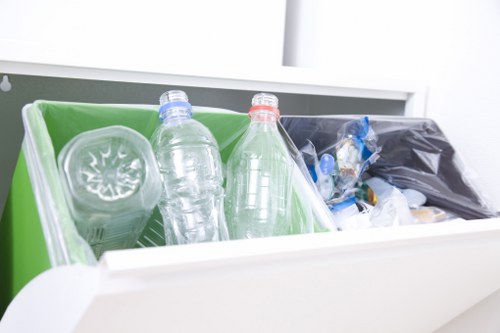
Welcome to our sustainability statement for Garden Clearance Coney Hall. We are committed to operating an eco-friendly waste disposal area and a practical, long-term sustainable rubbish area policy for garden clearances in Coney Hall and the surrounding boroughs. Our aim is to minimise landfill, maximise reuse and recycling, and operate transparently so residents and local partners can see how green waste, timber, soil and general garden detritus are handled from collection to final processing.Our approach to site operations emphasises source separation and low-impact logistics. We work to ensure that green waste is kept apart from mixed waste at the point of collection, and that soils and inert materials are processed or re-used locally where feasible. This aligns with the wider boroughs' approach to waste separation, where many local councils already separate dry recyclables, food and garden waste to raise recovery rates and reduce carbon emissions associated with haulage and disposal.
Targets: Recycling Percentage and Waste Diversion
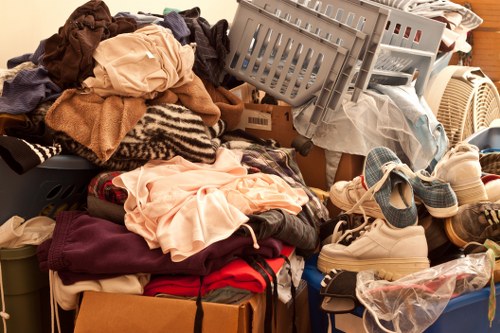
We have set a clear recycling percentage target: an 80% overall diversion rate by weight within three years for all garden clearance projects, with a specific 90% diversion target for green and timber materials. This target covers materials that we can divert to composting, chipping (for mulch), reuse, donation, or recycling facilities. We monitor progress quarterly, report aggregate performance, and continually refine sorting and transfer practices to improve outcomes.To reach these goals we rely on a network of local transfer stations and recycling centres. Our collections are routed to nearby municipal and private facilities, including borough recycling centres, authorised transfer stations and regional depots. By reducing travel distance to these sites we lower CO2 emissions and turnaround times. Where possible we prioritise local processing so that composting, chipping and inert material reuse can occur within the borough footprint.
Charity Partnerships and Reuse Initiatives
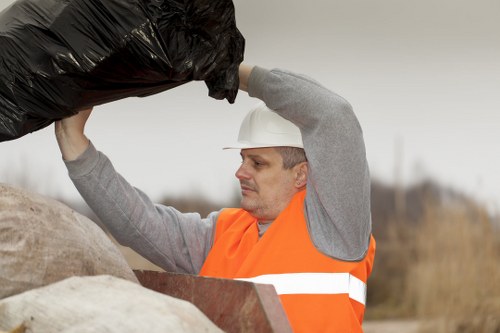
We actively partner with local charities and social enterprises to give usable items a second life. Partnerships include established reuse groups, community allotments, and furniture charities that accept garden furniture, planters and tools in good condition. Examples of the types of partners we work with include reuse charities, community allotment projects and national chains with local branches that manage donated household items. Our pickup teams are trained to identify items suitable for donation and to record transfers so donations are tracked and counted toward our reuse targets.Partnership benefits include reduced disposal costs, social value through support for local organisations, and higher material recovery rates. We also work with specialist recyclers for items like treated timber, metals and plastics so that materials are directed into the correct processing streams rather than being incinerated or landfilled.
Operationally, our fleet is designed to be low-carbon. We operate low-carbon vans including electric vehicles and plug-in hybrids for short-run urban collections, and biodiesel or low-emission vehicles for heavier loads and trips to regional depots. Route planning and load optimisation further reduce fuel consumption. Every effort is made to consolidate collections and coordinate with other local services to reduce empty running and overall fleet miles.
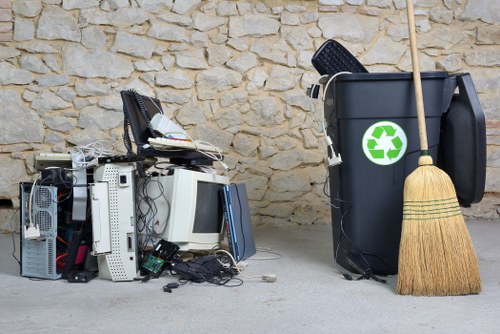 At the site level, our sustainable rubbish area setup includes segregated bays for:
- green and garden waste (for composting and chipping),
- wood and timber (for recycling or energy recovery where reuse is not possible),
- metals and hard plastics (for recyclers),
- soils and stones (for reuse in landscaping projects),
- items suitable for donation to charities.
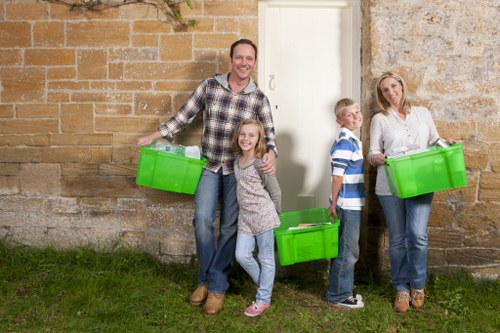 We also implement on-site processing where practical: small-scale chippers convert cut branches into mulch used in local parks and community gardens, while segregated green waste is transported to accredited composting facilities. For materials that cannot be recycled, we evaluate energy-from-waste options that meet environmental standards and prefer facilities with high efficiency and low emissions.
Compliance and transparency are central. Our processes comply with local authority regulations and the waste hierarchy — prioritising prevention, reuse, recycling, and only then energy recovery and disposal. We keep records for audits and can report aggregated diversion metrics for community and municipal partners. Periodic reviews help us adapt to evolving borough policies and opportunities created by new recycling streams.
Engagement with residents is part of creating a resilient, circular local economy. By encouraging pre-clearance sorting, offering pickup options that favour reuse, and explaining the environmental benefits of proper separation, we increase the quality and volume of materials that can be recycled. Our teams explain simple sorting steps and highlight how following the boroughs' waste separation guidelines supports higher recovery rates for all.
Garden-clearance in Coney Hall is not just about removing waste — it’s an opportunity to contribute positively to local sustainability. Our combined strategy of clear diversion targets, local transfer station use, charity partnerships, and low-emission transport supports a measurable reduction in landfill and carbon footprint. We remain committed to continual improvement so that every clearance contributes to a greener Coney Hall and a sustainable rubbish area for the whole community.